
Unlocking Success: Top Ten Benefits of Migrating Your ERP System to the Cloud

Benefits of Migrating ERP to the Cloud: Top 10 Advantages
The benefits of migrating ERP to the cloud have become increasingly important for businesses looking to reduce IT costs, improve flexibility, and modernize operations. As companies move away from traditional on-premise systems, cloud ERP can offer greater scalability, accessibility, security, and integration capabilities. Traditionally, ERP systems were housed on-premise, requiring significant investment in hardware, maintenance, and IT resources. However, with the advent of cloud computing, more and more businesses are migrating their ERP systems to the cloud. SAP notes that modern cloud ERP can reduce infrastructure costs, simplify updates, and make it easier to scale as business needs change. In this blog post, we’ll explore the top ten benefits of making the switch from an on-premise ERP solution to a cloud-based one.
Cost Savings: One of the most immediate benefits of moving to a cloud-based ERP system is cost savings. By eliminating the need for on-premise hardware and infrastructure, businesses can significantly reduce their upfront capital expenditures and ongoing operational costs.
Scalability: Cloud-based ERP systems offer unparalleled scalability, allowing businesses to easily scale up or down based on their changing needs. Whether you’re experiencing rapid growth or seasonal fluctuations in demand, the cloud provides the flexibility to adapt quickly without the need for costly hardware upgrades.
Accessibility: With a cloud-based ERP system, employees can access critical business data and applications from anywhere with an internet connection. This accessibility fosters collaboration and empowers employees to make informed decisions in real-time, whether they’re in the office, at home, or on the go.
Enhanced Security: Cloud ERP providers typically invest heavily in security, data protection, monitoring, backups, and disaster recovery, although the actual level of protection depends on the provider, configuration, and shared security responsibilities. Leading cloud providers invest heavily in state-of-the-art security measures, including data encryption, multi-factor authentication, and regular security audits, to safeguard sensitive business information from cyber threats.
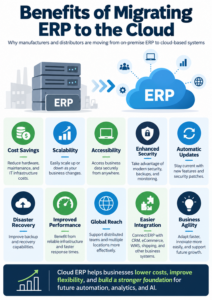
Ten key benefits of cloud ERP, from lower IT costs and easier updates to better integration, scalability, and business agility.
Automatic Updates: Cloud-based ERP systems are continuously updated by the provider, ensuring that businesses always have access to the latest features, bug fixes, and security patches without the hassle of manual updates. This seamless update process minimizes downtime and ensures that businesses can leverage the full potential of their ERP system.
Disaster Recovery: Disaster recovery is a critical consideration for any business, and cloud-based ERP systems excel in this area. By leveraging redundant data centers and robust backup mechanisms, cloud providers can ensure rapid recovery in the event of a disaster, minimizing data loss and downtime.
Improved Performance: Cloud-based ERP systems often deliver superior performance compared to on-premise solutions, thanks to their advanced infrastructure and optimized architecture. Businesses can enjoy faster response times, smoother user experiences, and greater reliability, even during peak usage periods.
Global Reach: For businesses with global operations or distributed teams, the cloud offers unparalleled reach and accessibility. Cloud-based ERP systems enable seamless collaboration across geographies, allowing teams to work together effectively regardless of their physical location.
Easier Integration: Integrating various business systems and applications is essential for streamlining operations and driving efficiency. Cloud-based ERP systems typically offer extensive integration capabilities, making it easier to connect with other software solutions such as CRM systems, e-commerce platforms, and supply chain management tools. Modern cloud ERP platforms can also support integration, automation, real-time analytics, and AI as businesses modernize their operations.
Business Agility: Last but certainly not least, migrating to a cloud-based ERP system enables businesses to become more agile and responsive to market changes. With the ability to deploy new features and functionality rapidly, businesses can innovate faster, adapt to evolving customer needs, and stay ahead of the competition. Cloud ERP can also create a stronger foundation for newer technologies such as automation, analytics, and artificial intelligence.
The benefits of migrating ERP to the cloud go beyond simply reducing hardware costs. Cloud ERP can help businesses improve scalability, accessibility, system performance, integration, security, and overall agility. For companies planning future automation, analytics, or AI initiatives, cloud-based systems can also provide a more flexible foundation for continued modernization and growth.
Contact Support One for your free evaluation on moving to the cloud.

Questions about moving your SAP Business One to the cloud? Let’s talk

