AI in ERP Systems Use Cases: 10 That Deliver ROI
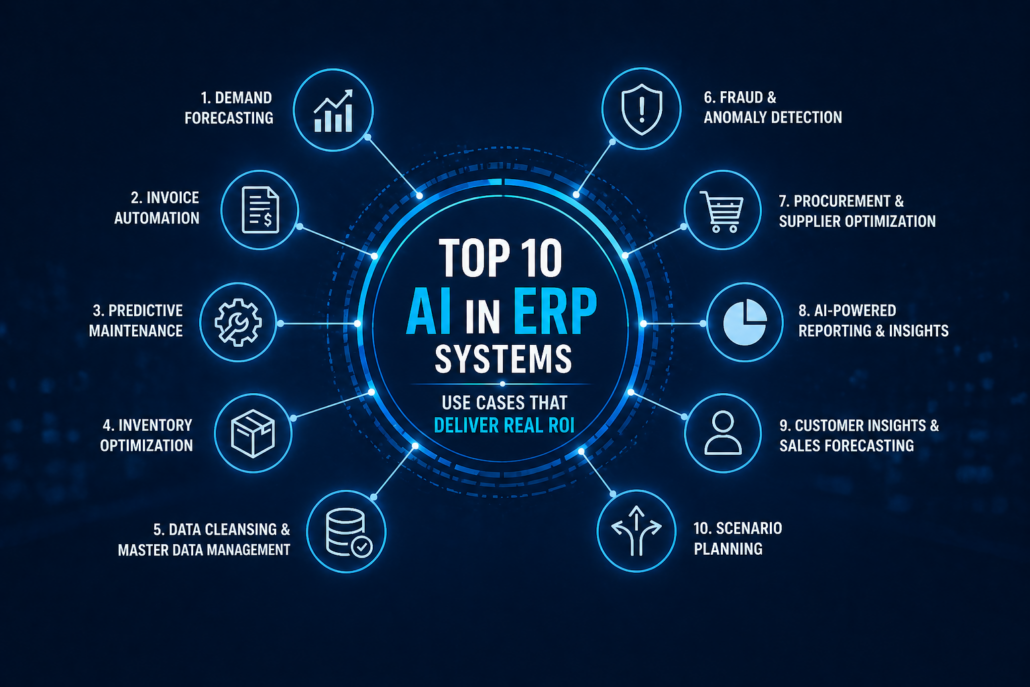
AI in ERP Systems Use Cases: 10 Practical Examples
AI in ERP systems use cases are helping manufacturers and distributors reduce costs, improve forecasting, automate routine work, and make faster, more informed decisions. In this guide, you’ll discover 10 ERP AI examples that demonstrate how artificial intelligence is delivering measurable ROI across finance, operations, inventory, and supply chain management. This guide explores practical SAP Business One AI use cases alongside broader ERP AI applications that can help businesses improve decisions, efficiency, and profitability.
In our last post, we broke down what AI in ERP systems actually does today.
Now let’s get more practical.
Because the real question most companies are asking isn’t:
“What is AI?”
It’s:
“Where does AI actually deliver measurable ROI inside ERP?”
The answer: not everywhere.
But in the right use cases, AI is already delivering real, tangible business value—from cost reduction to better forecasting and faster decision-making.
The ERP AI examples below show how businesses can apply artificial intelligence to practical sales, finance, inventory, purchasing, operations, and management challenges.
These AI in ERP systems use cases highlight where companies are seeing real, measurable returns—not just theoretical benefits. However, not every organization can take advantage of these opportunities due to gaps in AI in ERP systems readiness.
SAP Business One AI Use Cases Are Becoming More Practical
When we originally explored these AI in ERP systems use cases, many of the opportunities involved combining ERP data with external AI tools, integrations, and specialized applications.
That is beginning to change for SAP Business One users.
SAP Business One 10.0 FP 2608 introduces native generative AI capabilities including Ask AI, reusable AI question templates, conversational follow-up, and AI-generated user-defined queries. SAP has also introduced support for Model Context Protocol (MCP), creating a foundation for partners to connect AI agents with SAP Business One through the Service Layer.
This means businesses should now think about SAP Business One AI use cases in three categories:
Available today: Native capabilities such as Ask AI and AI-generated queries.
Practical today with additional tools or integrations: AI applications that combine SAP Business One information with other technologies.
Emerging opportunities: More advanced partner-built AI agents and workflows enabled by MCP, the Service Layer, and other AI technologies.
These new capabilities also provide concrete ERP AI examples of how natural-language interaction is beginning to become part of everyday ERP use.
Throughout the examples below, it is important to distinguish between these categories. Not every advanced AI use case is automatically included in SAP Business One simply because AI functionality is now available.
Why AI in ERP Systems Use Cases Matter
Many organizations know artificial intelligence can improve business operations, but they’re unsure where to begin. The best AI in ERP systems use cases solve specific operational problems instead of trying to replace employees or automate everything.
Whether you’re evaluating SAP Business One or another ERP platform, focusing on proven AI use cases helps you prioritize projects that deliver measurable business value quickly.
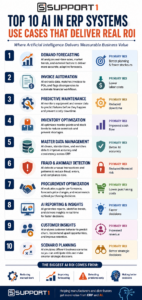
Discover the top 10 AI in ERP systems use cases that help manufacturers and distributors reduce costs, improve forecasting, automate processes, and achieve measurable business ROI.
10 Real-World ERP AI Examples That Deliver ROI
1. Demand Forecasting That Actually Adapts
Traditional ERP forecasting relies heavily on historical averages.
AI changes that completely.
It analyzes:
- Real-time sales data
- Market trends
- External variables (seasonality, pricing, disruptions)
👉 ROI Impact:
- Reduced stockouts
- Lower excess inventory
- Better cash flow